Why Drink Fennel Tea After Dinner? The Ancient Roots of This Digestive Herb & Plants Used for Digestion
The connection between eating finook at family dinners, growing up Italian-American in New York and my newest herbal tea: Belly Ache Be Gone with Fennel seed, Star Anise, Marshmallow & Skullcap.
If you grew up in an Italian-American family like I did, you may remember a strange looking vegetable on the table after Sunday dinner. In my family, we called it “finook.” Our nick name for the Italian word for fennel, finocchio.
My grandma would bring out raw fennel after dinner, especially after the kind of enormous Italian meal that leaves you wondering how you're possibly going to make room for dessert. Somehow there was always room for a sweet treat.
As a kid, I didn't think much of it. As an herb lover and tea maker, I have a new appreciation for the tradition Grandma was carrying on. It’s no surprise to discover in my adult years that fennel has been a digestive herb for centuries.
Sunday Dinner
(noun)
A meal attended at Grandma’s house nearly every Sunday where antipast, gravy, meatballs, and anisette cookies were staples. Aunts, uncles, and cousins were all in attendance. You never left a Sunday dinner with anything but an overstuffed stomach. Many of our fondest childhood memories were made at Sunday dinners.
Fennel Has Been a Digestive Herb for Centuries
Fennel’s scientific name is Foeniculum vulgare. It’s a Mediterranean plant with a long history as food and herbal medicine. Its aromatic seeds and bulbous root have traditionally been used to support digestion, particularly following meals.
The tradition stretches back centuries. Medieval herbal writings praised fennel for the stomach. It eventually became a familiar plant in monastery and kitchen gardens throughout Europe.
But the tradition isn't exclusively European. Families across the world have fennel written into their stories.
Across parts of India, the Middle East, and South Asia, fennel seeds have developed a reputation as an after-dinner herb. You may have encountered mukhwas at an Indian restaurant. They are a colorful after-meal mixture of dried fennel seed and candy. It's usually available in a communal bowl by the exit door for you to chew on your way out.
That distinctive sweet, almost licorice-like flavor comes largely from anethole, one of fennel's naturally occurring aromatic compounds.
Whether we’re fully aware of the reason why we’ve carried on these traditions, you can see that fennel is begging us to eat it for its digestive prowess. Whether it be fresh from a bowl after Sunday dinner or served to you dried with candy after finishing up at the Indian buffet.
An ancient herbal remedy in a New Tea: Belly Ache Be Gone by Glam Gardener
As an herb lover, gardener, tea maker, and friend of many kinds of cuisines, I knew I had to welcome this wonderful herb into the Glam Gardener family.
Our bread and butter (no pun intended) is working in-person markets. We hear directly from our customers exactly what they’re looking for. We’ve been asked for a belly remedy for a long time.
As someone who spent a near decade of their life in digestive discomfort, I wanted to approach this carefully. I spent years trying various diets, going to doctors, getting endoscopies, and buying expensive food sensitivity tests.
I’m very lucky that all of this is behind me and I’m doing wonderfully. Choosing to eat a gluten free diet, eating seasonally, and including herbal remedies as part of my daily life has helped me a ton. I am in a very good place.
Nonetheless, digestive issues are complex. They can be autoimmune, caused by diet, stress, behavior, and about a million other things. I never wanted to pretend to have the cure.
But with my experience, I wanted to create a supportive remedy that would create a positive, beneficial, and flavorful digestive experience for others.
We tinkered with this formula for over a year before releasing it to the public. Not through focus groups or professional marketing agencies. We added herbs that may be beneficial to digestion that would complement fennel seed’s unique flavor. We shared cups of tea together until we felt it was just right. Trying to formulate a blend that included ancient medicinal plants like Star Anise as well as natives like Skullcap.

Why I Paired Fennel With Skullcap, Star Anise & Marshmallow
When I sought out to create a tea for digestion, I wanted fennel seed to be part of a more well-rounded formula. I paired organic Fennel seed with Star anise, Marshmallow root and leaf, and American Skullcap. They were each chosen for a different role in the blend.
Star anise complements Fennel beautifully, not only because of its naturally sweet, licorice-like flavor, but because it also has a long history of use in herbal traditions surrounding digestion.
Marshmallow brings something completely different to the formula. I wanted to combine the benefits of its aerial (leaf) and root parts for a whole-plant-medicine approach. Marshmallow is rich in mucilage, a naturally slippery plant compound that becomes soothing when steeped in water. It’s one of the world’s most beloved herbal remedies.
And yes, Marshmallow (the plant) is related to marshmallows (the dessert). It’s believed that the dessert derived from an ancient herbal remedy for sore throats, where honey and Marshmallow root sap were combined for a soothing remedy.
And finally, I added American skullcap. Digestion isn't always just about what we've eaten. Our nervous system and digestive system are deeply connected. Skullcap has traditionally been used by herbalists as a calming nervine, which made it an interesting addition to a formula intended for those moments when your stomach and the rest of you could both use a little settling down.
Plus, it’s native to our region. We always try to include native, often lesser-known plants in our blends to highlight the rich herbal history growing all around us.
Finding wisdom in herbs & sips of tea
I love discovering how a plant transcends borders and cultures throughout time.
This is what I believe makes plants like fennel so special. Despite our differences, we have these rich connections with herbs and cuisine that we’ve shared for millennia. It’s almost like these plants have a purpose to heal us beyond their medicinal properties. These traditions reveal our togetherness. Through flavor, herbal medicine, and shared cultural practices.
When we look for the reason why plants have medicinal properties, we look at their compounds and their chemical structure. But what if their healing benefits were a little sneakier. Afterall, they’re practically screaming at us. Begging us to slow down. Stop and smell the roses. Getting us to sit down at the dinner table in community. Encouraging us to see the connection within our shared herbal traditions.
Michael Pollan, a prolific food writer, first introduced me to the following concept. What if plants were actually manipulating us. Using their unique wisdom to mesmerize us into loving them. So much so, that we nurture their existence. Intertwining their stories with ours. Is that how we ensure that we grow old together?
At the end of the day, Belly Ache Be Gone is just an herbal tea. But it's one of my favorite examples of how an everyday family tradition can have centuries of herbal history hiding behind it.
It turns out Grandma knew exactly what she was doing with that bowl of “finook” after dinner.
Photo credits: Fennel root images by Denny Sachtleben. Fennel flower image by Melissa Brown. Star Anise image by Uliana Kopanytsia. Marshmallow image by JOG photos. All images are copyright free and available for use from Unsplash.
Real Reviews from Real People: Here's what Capri Banks from Let's Talk Tummy said about Glam Gardener's Belly Ache Be Gone
Let's Talk Tummy is an IBS, GERD, Gluten Free & Gut Safe Blogger. This was an authentic and unpaid review! Follow them at @letstalktummy on Instagram
"I tried it on a day when my stomach was REALLY bothering me, and within about an hour I personally noticed a big difference in how I was feeling. I honestly think it helped me get through the day without having to call out, which was huge!
And I have to mention the taste—I LOVE licorice (literally my favorite jelly bean 😂), so the star anise/fennel flavor was right up my alley. I know licorice isn’t everyone’s favorite, but I actually think even those who aren’t fans should give it a try, especially if stomach issues are something they deal with regularly.
Thank you again for sending it! I’m excited to share my honest experience because this is definitely something I think my Tummy Pals should know about!"
EXPLORE ALL HERBAL PRODUCTS
-
Belly Ache Be Gone • Pre-bagged herbal tea for digestive support • Marshmallow Skullcap & Fennel
Regular price $17.00 USDRegular priceSale price $17.00 USD -
Self Heal • Mini Salve • Calendula, Goldenrod, Chamomile and Self Heal
Regular price $5.00 USDRegular priceSale price $5.00 USD -
Elderflower Cinnamon Rose Seasonal Specialty Simple Syrup with Handcrafted Organic Ingredients
Regular price $20.00 USDRegular priceSale price $20.00 USD -
RESPIRATOR-EASE • Single tea bag • Herbal tea with Mullein, Licorice root & Slippery Elm
Regular price $2.00 USDRegular priceSale price $2.00 USD -
Pain Relief • Healing Salve for muscles and joints with Arnica, Comfrey and Peppermint
Regular price $20.00 USDRegular priceSale price $20.00 USD -
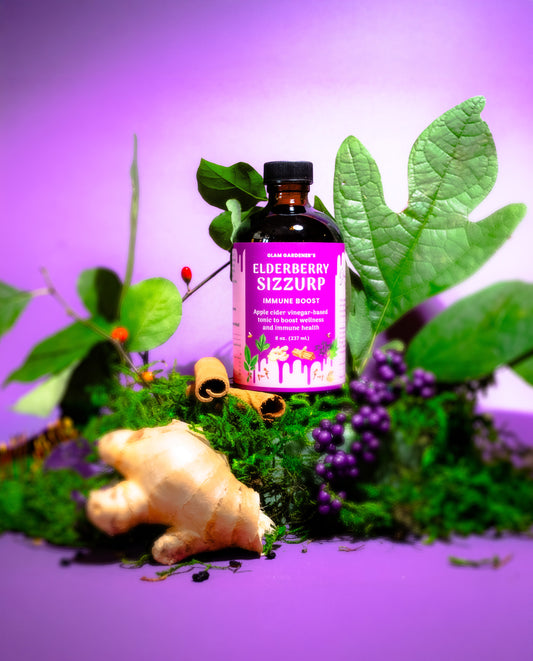
Elderberry SizZurp • Raw & organic Apple cider vinegar with local honey, wild plants, wildcrafted elderberries, and organic ingredients
Regular price $25.00 USDRegular priceSale price $25.00 USD -
LAVENDER DREAMS • Soothing, floral evening pre-bagged tea with Wildcrafted Sassafras, Bayberry & Organic Lavender
Regular price $17.00 USDRegular priceSale price $17.00 USD -
LAVENDER DREAMS • Soothing, floral evening looseleaf tea with Wildcrafted Sassafras, Bayberry & Organic Lavender
Regular price $23.00 USDRegular priceSale price $23.00 USD